Should You Auto-Charge After a Free Trial or Ask People to Opt In? Let’s Compare.
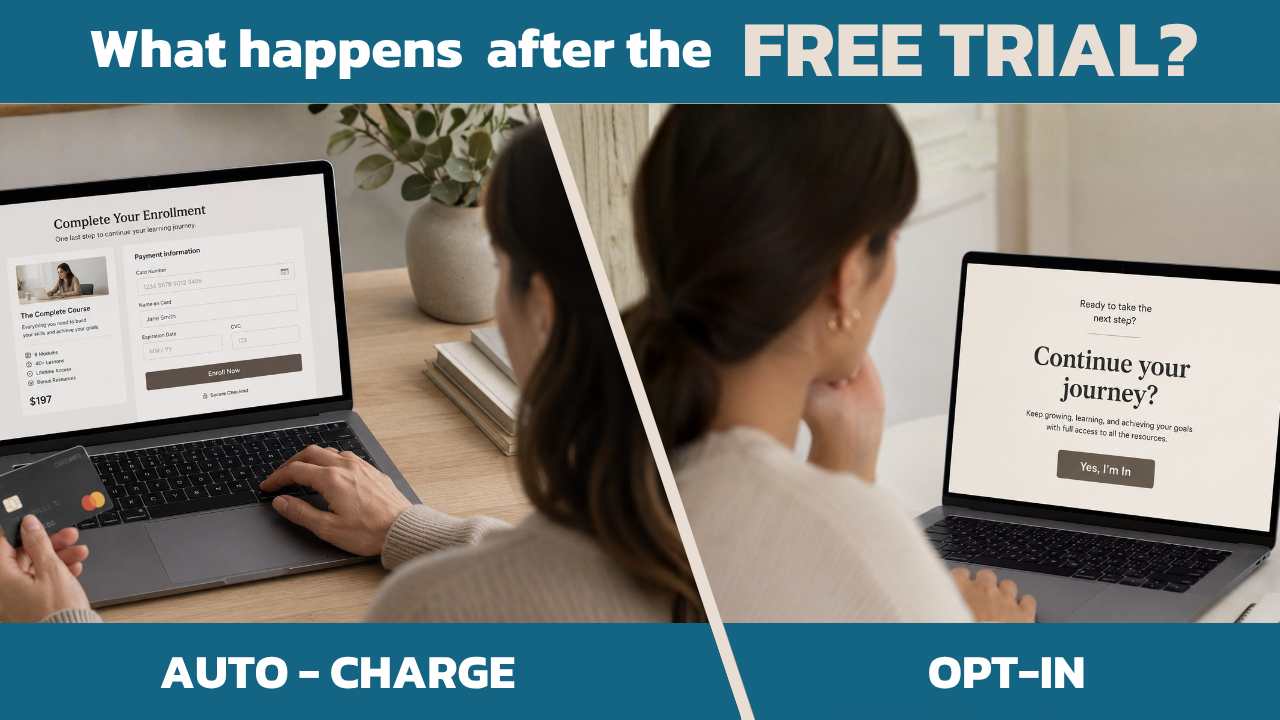
When offering a free trial for your membership or course, one of the biggest decisions you’ll make is how to handle the transition from free to paid.
Do you automatically charge after the trial ends?
Or do you ask participants to actively opt in and purchase?
Both strategies are valid—but they come with different outcomes and implications for your business. Let’s break down the pros and cons of each so you can make the best choice for your audience and your goals.
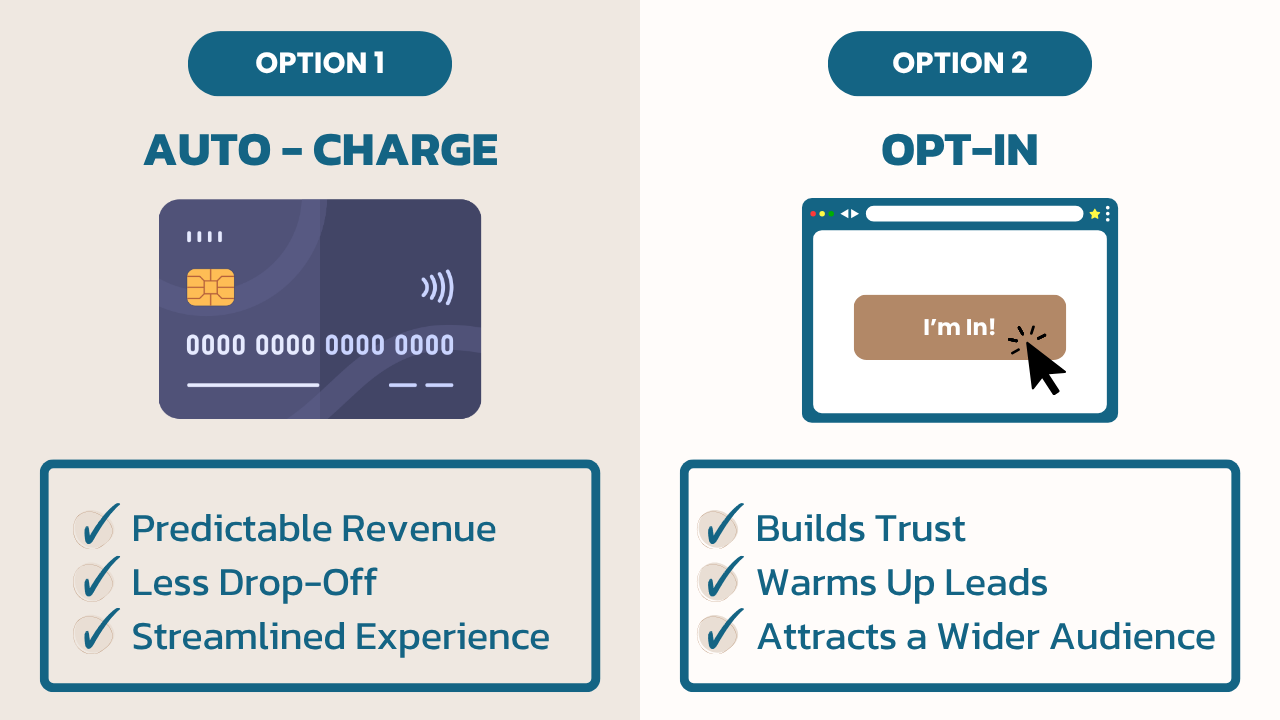
Option 1: Auto-Charge After the Free Trial Ends
This approach means the user provides their payment info up front, and when the trial ends, they’re automatically enrolled in the paid program unless they cancel.
✅ Pros:
- Predictable Revenue: If your content is strong and engagement is high, this method often results in higher conversion rates and a more reliable monthly income.
- Less Drop-Off: People are less likely to cancel if they don’t have to take action—meaning you retain more subscribers by default.
- Streamlined Experience: Users don’t need to re-enter payment info, reducing friction.
❌ Cons:
- Potential for Frustration: If users don’t realize they’ll be charged, it can result in refund requests, chargebacks, or negative feedback.
- Lower Trust: Some audiences may view auto-charging as pushy, especially if they’re newer to your brand.
- Refund Management: You may spend more time managing billing issues or explaining the process.
Option 2: Provide an Opt-In Link at the End of the Trial
With this strategy, you give full access for a limited time—no credit card required—and at the end of the trial, you invite users to purchase with a clear call-to-action.
✅ Pros:
- Builds Trust: This approach feels low-pressure and respectful. You’re not assuming the sale—you’re inviting it.
- Warms Up Leads: Great for people who are new to your brand and still building confidence in your content or offer.
- Attracts a Wider Audience: More people may say yes to a trial when there’s no upfront payment barrier.
❌ Cons:
- Lower Conversion Rate: Without an automatic charge, you’ll only convert those who take the initiative to buy.
- Requires Strong Follow-Up: You’ll need a well-thought-out email sequence, reminders, and a compelling CTA to nudge people to take action.
- No Revenue Predictability: You’ll likely see more fluctuation in conversions month to month.
So… Which One’s Better?
It depends on your business model and your audience.
If you have a warm audience, clear offer, and proven results, auto-charge may give you better retention and revenue with less admin.
If you’re newer to your audience, focused on building trust, or want to prioritize a low-pressure experience, opt-in after trial might be a better fit.
There’s no one-size-fits-all answer—but knowing your options (and your audience!) helps you choose the strategy that’s aligned with how you want to run your business.
Need help setting up your free trial funnel or crafting your post-trial email sequence? Connect with us here to get started!