How to Own Your Online Business Using Kajabi (and What That Means for You)
I watched one of my clients lose 50,000 Instagram followers overnight. Hacked. Held for ransom. Years of work—gone.
The scary part? It could happen to you today. Your Instagram, your YouTube channel, your Udemy students—all of it could disappear, and there's nothing you could do about it.
Because here's the truth most creators don't realize: you don't actually own any of it.
After helping dozens of course creators move their businesses off platforms that hold them hostage, I've seen firsthand what happens when you don't control your audience, content, or revenue. In this post, I'm breaking down the three critical assets you need to own to have a real business—and why Kajabi is the only platform that gives you complete ownership of all three.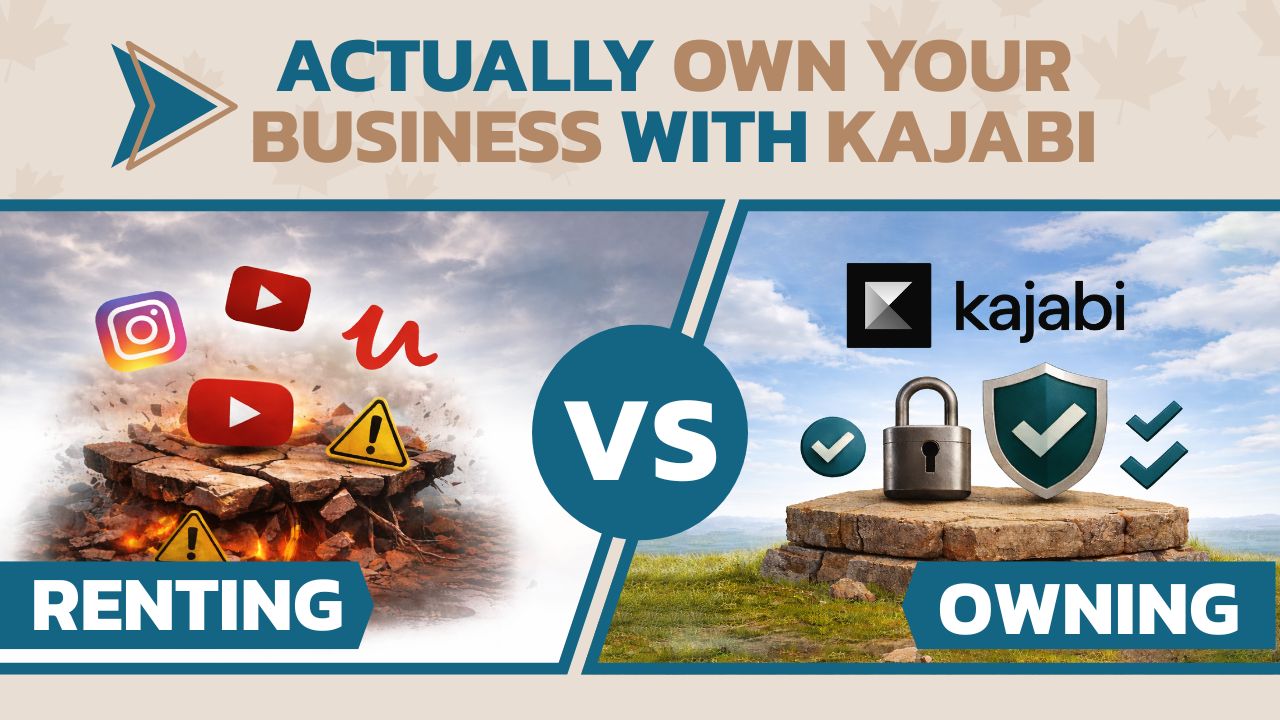
What Does It Mean to "Own" Your Business in Kajabi?
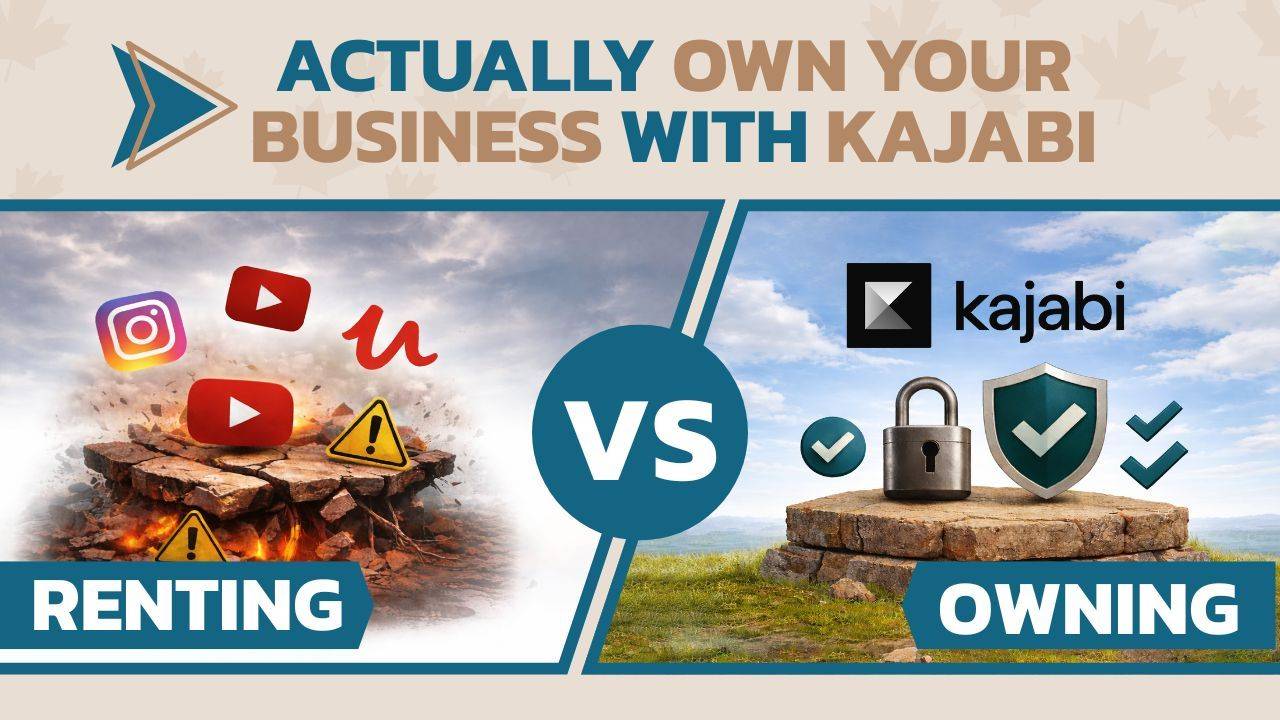
When you build on Instagram, YouTube, Udemy, or Teachable, you're building on borrowed land. The platform owns your audience, controls your content delivery, and takes a cut of your revenue.
Kajabi flips that model completely.
With Kajabi, you own three critical assets:
- Your audience (real contact info, not follower counts)
- Your content (hosted under your brand, your rules)
- Your revenue (100% of sales, minus standard processing fees)
Why You Need to Own Your Audience (Not Just Rent Followers)
The Problem with Platform-Based Audiences
When my client's Instagram got hacked, they had 50,000+ followers but zero way to reach them. No emails. No phone numbers. Just usernames on a platform they couldn't access.
Even if your account never gets hacked, the algorithm decides whether your content gets seen. You could post today and reach 5% of your followers—if you're lucky.
Here's what you don't own on other platforms:
- Instagram/TikTok/YouTube: The algorithm controls your reach. One change and your views drop 80%.
- Udemy/Teachable marketplace plans: Students belong to the platform, not you. You can't email them outside the system.
- Facebook: Organic reach has been dying for years. You're paying to reach people who already follow you.
What Kajabi Gives You Instead
With Kajabi, you collect real contact information through your own branded landing pages and opt-in forms. Names, emails—all of it goes into your database. Not Instagram's. Not YouTube's. Yours.
Your email list in Kajabi is:
- Exportable (you can take it with you anytime)
- Taggable (segment by interest, behavior, purchase history)
- Yours to contact (no platform permission required)
But here's what makes Kajabi even more powerful: the built-in community feature.
When you set up your Kajabi community, your members get a dedicated space to connect with you and each other—completely safe from hackers, algorithm changes, and platform shutdowns.
What Happened After My Client Got Hacked
After getting their Instagram back, they started moving their most engaged followers into their Kajabi community. Now when they want to communicate, they don't hope Instagram shows their post. They go directly to their owned space.
The result? The audience inside Kajabi was way more valuable. More engaged. More ready to buy. When they launched new offers, they sold faster with less effort—because they were talking to people who'd already raised their hand and said, "Yes, I want to hear from you."
That's the difference between renting and owning.
Why You Need to Own Your Content (Not Just Upload It Somewhere)
The Problem with Platform-Hosted Content
A lot of course creators upload to YouTube, Udemy, or Skillshare thinking it's safe and easy. It's easy—but it's not protected.
Here's what you don't control:
- YouTube: Videos can be demonetized, flagged, or taken down for "community guideline violations"—even if you did nothing wrong.
- Udemy: Most instructors are auto-enrolled in Udemy's deals program, which means Udemy controls your pricing. They can discount your $200 course to $9.99 without asking. You can opt out, but then you lose promotional visibility.
- Skillshare: You get paid based on watch time, not what you charge. Skillshare pools subscription revenue and pays you a percentage based on minutes watched. Zero control over your revenue model.
And the scariest part? If the platform changes its rules, rebrands, or decides they don't want your content anymore—it's gone, and you have no recourse.
What Kajabi Gives You Instead
With Kajabi, you own your content. Your courses are hosted in your space, under your brand. You set the terms:
- Layout and design
- Access levels (drip content, all-at-once, locked modules)
- Pricing and payment plans
- Delivery style (video, audio, text, downloads)
You're not competing with other creators inside the platform. Your students aren't getting distracted by ads or recommendations for someone else's course. It's your branded experience from start to finish.
And if you ever want to leave Kajabi? You can. Export your content and take it with you. You're not locked in.
Why This Matters for Your Reputation
You're building a reputation as an expert. You can't protect the integrity of your message if:
- YouTube is running random ads over your course videos
- Udemy is discounting your premium course to $9.99
- Skillshare is recommending your competitor's content right next to yours
With Kajabi, your content is delivered exactly the way you intended. No distractions. No algorithm deciding who sees it. Just you and your students.
Why You Need to Own Your Revenue (Not Give It Away)
The Problem with Platform Revenue Models
Most creators don't realize how much income they're giving away until they do the math.
Here's what happens when you monetize on other platforms:
- Udemy/Skillshare: Take up to 50% (or more) of every sale, depending on how the student found your course.
- YouTube ad revenue: Completely unpredictable. One algorithm change and your income drops.
- Instagram monetization: Only works with massive reach or brand deals—and even then, it's inconsistent.
- Some course platforms: Charge you a monthly fee and take a percentage of every sale. You're paying them to use the platform, then giving them a cut on top of that.
What Kajabi Gives You Instead
With Kajabi, you own 100% of your revenue.
Kajabi doesn't take a percentage of your sales. You pay a flat monthly fee (currently starting at $179/month for the Basic plan), and everything you make after that is yours.
The only fees you pay are standard payment processing fees through Stripe or PayPal—just like any other business.
You get to choose your pricing model:
- Subscriptions
- One-time payments
- Payment plans
- Free trials
- Bundles
- Upsells
You decide.
Why This Matters for Sustainability
Consistent revenue equals sustainability. If you can't predict your income, or you're giving away 30–50% of every sale, you can't build a strong business.
With Kajabi, you know exactly where every dollar is coming from and where it's going. You're not at the mercy of an algorithm or marketplace deciding how much you get paid.
You control your pricing. You control your revenue. You control your business.

Kajabi Pricing: What You Actually Pay (as of January 2026)
Since we're talking about ownership and cost, let's be transparent about what Kajabi actually costs.
As of January 13, 2026, Kajabi offers four monthly plans:

My Honest Take on Which Plan to Choose
- Basic ($179/mo): Great if you're solo and launching your first full program. One website and one admin is fine early on, but you'll hit the ceiling when you want to automate more or add a teammate.
- Growth ($249/mo): This is the sweet spot I recommend most often. Advanced automations save hours, the affiliate program opens new revenue channels, and 10 admin seats mean you can bring in your VA, designer, or coach without sharing logins. If you're planning launches or scaling email flows, Growth pays for itself fast.
- Pro ($499/mo): Perfect for multiple brands or programs that need separate websites, or if you need more advanced features like Code Editor or API access.
What Kajabi Replaces (and Why Total Cost Matters)
Here's where Kajabi's value really shows up: tool consolidation.
Kajabi replaces:
- Website hosting (Squarespace, WordPress)
- Landing page builder (Leadpages, ClickFunnels)
- Course platform (Teachable, Thinkific)
- Email marketing (Mailchimp, ConvertKit)
- Video hosting (Vimeo, Wistia)
- Community platform (Circle, Mighty Networks)
- Payment processing setup
Add up what you're currently paying across all those tools. For most creators, it's $150–$300/month—and you're managing multiple logins, integrations, and support teams.
Even at $179/month, many creators net out neutral or save overall—and get a simpler, faster system.
The Reality: The Next Algorithm Change Is Coming
The next algorithm change is coming. The next platform rule change too. And the next hack could happen tomorrow.
When it does, will you own your audience? Will you own your content? Will you own your revenue?
Because if you don't, you don't own your business. You're just building on someone else's property.
The creators who are thriving right now aren't playing the social media game better. They've stopped playing it altogether. They're building businesses that are:
- Safe from hackers
- Protected from algorithm changes
- Immune to platform shutdowns
- Aligned with their brand and values
- 100% in their control
When you own all three—audience, content, revenue—you own your business.
And that's what Kajabi gives you.
Ready to Own Your Business? Here's How to Get Started
If you're tired of building on someone else's platform and ready to actually own your business, now is the perfect time to test Kajabi.
You can try Kajabi with an extended 45-day trial—giving you a full month to explore the platform, migrate your content, and see what it's like to own your audience, content, and revenue.
When you sign up through our link, you'll get exclusive bonuses to help you get started faster.
👉 Get Kajabi's extended 45-day trial + exclusive bonuses
Common Questions About Kajabi
How much does Kajabi cost per month?
$179 (Basic), or $499 (Pro) as of January 2026. All plans include a 14-day free trial.
Can I export my email list from Kajabi?
Yes. Your email list is fully exportable. You own it, and you can take it with you anytime.
Does Kajabi take a percentage of my sales?
No. Kajabi charges a flat monthly fee. You keep 100% of your revenue (minus standard payment processing fees from Stripe/PayPal).
What if I'm already on Teachable or Udemy?
You can migrate your courses, students, and content to Kajabi. Many creators do this to regain control of pricing, branding, and their audience.